Fadwa Suleiman’s Speech Represents Me

I have my reservations on the Syrian National Council, Burhan Ghalioun’s “apology” to the Kurds is shameful, and in a free democratic Syria the battle against nationalism and national Arab identity will continue, it will take a while, a long while, until we reach that separation between “belonging” and “identity.” What the hell is identity and why do we need it in the first place? Some say, that in order to lose “conventional self-identification,” or sectarianism, we need to be “Syrians.” But isn’t by becoming Syrians, we enhance a racist, national identification as being solely “Arabs”? Or else, why do we refer to “Syrian-Kurds” as such? Once we drop hyphenations, we become as one, and in order to be one, we need to lose those national preconceptions of ourselves, as Sunni Muslims or as Arabs.
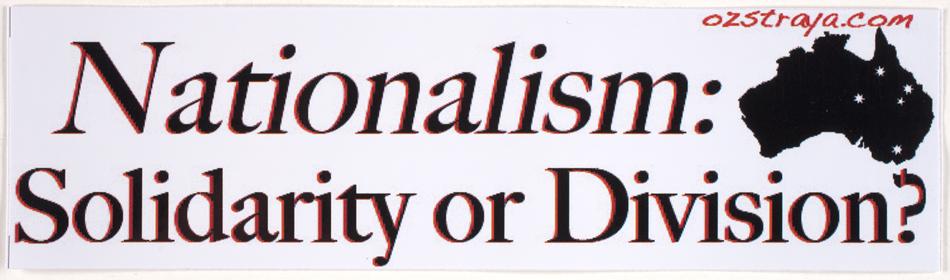
I don’t know what “Syrians” means, belonging to a geographical border? owning a “similar consciousness”? Don’t get me wrong, I do relate to the people of Syria the most, but that is also relative. I am sure someone supporting Hezbolla relates to a Syrian supporter of Assad, and someone like me, relates to all revolutionaries in the region. So what the hell?

I do not believe in a ‘national consciousness,’ I don’t believe in nationality, look how it is interpreted by those apologetic to Assad crimes, and those who’re fighting for their dignity and freedom, and they’re all “Syrians.”

So please, do not talk to me about being “Syrians.” I want to be something else, like Homsi or Dar’awi for example.
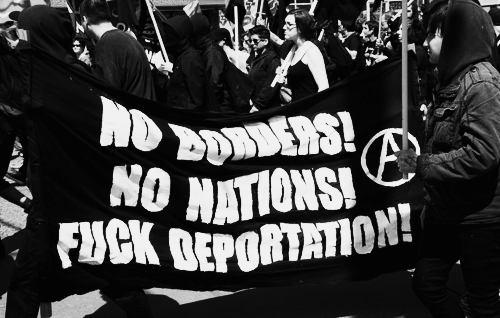
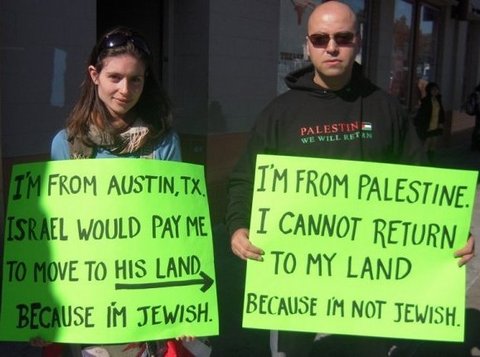
Colonization made us all a bunch of nationalists, and because of that we made Arab Jews our enemies. Fighting for a label than for a value. I want to be living hand in hand with all of you, and this cannot be done if we see ourselves as “majorities” and “minorities.” The foundation of this logic lies in nationalism. Look at Iranian regime’s idea of nationalism, it’s not sectarianism we’re taking about here, it’s precisely nationalism. Nationalism that colors a whole nation in one color, one self-identification based on “majority.” I am not an Arab, I am not a Sunni, but people see me like a Sunni and an Arab nonetheless. I don’t want to be a citizen when other citizens are prevented from getting their rights, I don’t want to be a Syrian when other Syrians cannot be one.

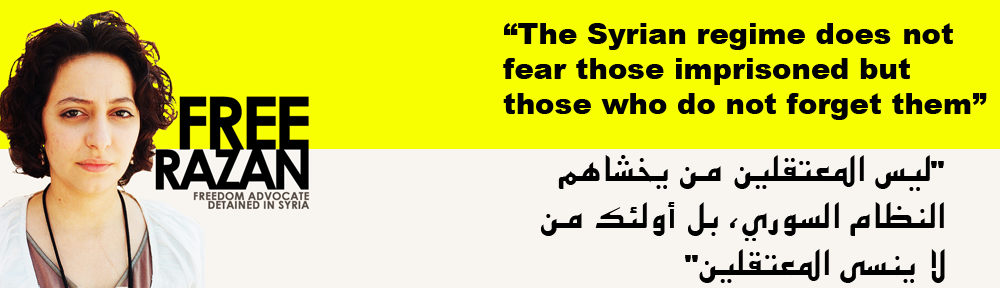
Syrian actress Fadwa Suleiman appeared this week at a demonstration in Homs. The regime is looking for her now, her life is in danger. She begun hunger strike 3 days ago.

I came here to talk about Fadwa Suleiman’s speech she made yesterday, and here I am rambling about postcolonial anxieties. Anyways, this woman is amazing, really, and not because she’s an Alawite, I am not sure if you don’t know this, but if you’re an Alawite, and you’re opposing the Syrian regime, you’re not only considered a “traitor,” but also you will be boycotted from those supporting the regime, and you’re most likely be killed, not because you’re opposing the regime, but precisely because you’re an Alawite and opposing the regime.

This is the first and only speech made by a Syrian woman publicly addressing her people, this is the first time that a Syrian actress addresses her people and starts a hunger strike, do you understand how courageous she is? Do you understand how much she is in danger right now?

She’s fighting for a value, she’s fighting for a whole different Syria, and I want to hear from Burhan Ghalioun is to say the same.

Listen to her speech here and read the English translation on Abu Kareem’s blog here. For a little background on Suleiman, here’s a good piece about her on BBC, I am sure you won’t find it on Angry Arab’s blog or MRZine.org and the likes.

Would You Be My Palestine?

We can buy Almaza and get to your uncle’s place while he’s having his Argileh with his friends outdoors.

We can buy some of the Armenian nuts you like.

We can sit next to each other on the Sofa.

We can get nervous.

We can allow silence to be so loud.

This is it.

We can turn Valentine into a sacred sin.

Would you break the law with me?

We can wait till we finish our first bottle.

We can forget about your tomorrow and mine.

You can let me start right here and now.

Continue reading

Helem replies to Massad: We are not agents of the West

Ghassan Makarem founding member and current Executive Director of Helem replied to Joseph Massad’s interview conducted with him by Reset Doc website. Here’s an extract of the interview:

The real problem with Massad’s interview is the lies, fabrications, and insinuations of being agents of the West against the people in Helem. This is an opinion we have heard many times from Salafists and chauvinists. The contention that homosexuals are agents of the West, that they are “imposing Western values”, and that they belong to the upper classes was also used by Khomeini before rounding up homosexuals and executing them. It is the same justification given to call for the arrest of HIV positive persons in Egypt and elsewhere and to pass a viciously homophobic law in Uganda.

Read the whole article here.

قولوا لرابطة السفر الدولية للمثليين والمثليات أن إسرائيل الفصل العنصري ليست مكاناً للاستجمام

الثامن من أيلول/سبتمبر 2009

صادر عن:

أحرار الجنس مناهضين للفصل العنصري الإسرائيلي، تورنتو

أحرار الجنس من أجل تقويض الإرهاب الإسرائيلي

الشبكة اليهودية الدولية المناهضة للصهيونية

أحرار الجنس الناشطون في حملة المقاطعة، وسحب الاستثمارات، والعقوبات على إسرائيل

تخطط رابطة شركات السفر الدولية للمثليين والمثليات IGLTA لعقد مؤتمر سياحي في تل أبيب، وذلك في السادس عشر من شهر تشرين الأول/ أكتوبر من العام الجاري، من أجل تعزيز السياحة الترفيهية الخاصة بالمثليين والمثليات والثنائيين والثنائيات والمتحولين والمتحولات جنسياً (م.م.م.م.). من المتوقع أن يتألف جمهور المؤتمر من وكلاء السفر المختصين بالترويج للسياحة المتعلقة بال م.م.م.م. وستقدم منظمة IGLTA من خلال هذا المؤتمر، وبالتعاون مع منظمة إسرائيلية للمثليين Aguda، الدعم المالي والرمزي لدولة تستمر في احتلال وقمع وتجريد ملايين الفلسطينيين من حقوقهم، إضافة إلى قتل وسجن الآلاف منهم.

لذا نتوجه، نحن مجموعات وأحرار جنس ناشطين بنداء إلى كافة الم.م.م.م والأصدقاء حول العالم لمشاركتنا احتجاجنا في مواجهة ترويج IGLTA للسياحة الترفيهية في إسرائيل الفصل العنصري، ونطالبها بإلغاء المؤتمر المزمع عقده في إسرائيل وبوقف أي شكل من أشكال الترويج السياحي لهذا البلد.

Continue reading

Iraq's New Surge: Gay Killings

Excellent article on the killings of gays in Iraq written by Rasha Moumneh appeared yesterday on Foreign Policy:

Western attention has always focused primarily on sectarian attacks in Iraq. Yet al-Sadr’s militia and its counterparts in countless neighborhoods and towns have long had other targets in their cross hairs. These men claim to bear the banners of religion and morality, defending against any transgressors. They paint themselves as the caretakers of tradition, culture, and national authenticity — which often means keeping women, as well as men, in their rigidly enforced traditional roles. Ironically, they sell their violence as a means of security: Amid the total upheaval of Iraqi society over the last eight years, many people regard any relaxing of gender roles as a threat to public order, undermining patriarchal power. And since the coalition forces failed to provide security after the invasion, such cultural conservatives have moved in to fill the role. Many aimless, unemployed advocates of rigid traditionalism have taken up the task with their guns.

Continue reading

Arab Jews Against Zionism

Some Mizrahi are very blunt about the link between Zionism and their plight. “If Israel had not been established, nothing would’ve happened to the Iraqi Jews,” opines the Iraqi-Jewish poet Me’ir Basri.

But the suspicion and distrust did not end there. Their resemblance to Arabs – in fact, you could argue that they are also “Israeli Arabs” – in everything but religion caused them to be viewed with a mixture of condescension, contempt and even fear. This kind of culture shock is, at one level, understandable, as it is a myth to expect the simple fact of belonging to a single faith automatically means that people are the same. “We have here a people whose primitiveness sets a record,” wrote a Ha’aretz reporter in 1948, not of the Palestinians, but of Mizrahi refugees.

This anti-Mizrahi prejudice among the Ashkenazi elite (European Jews) translated into them being whisked away to live in the remotest parts of Israel and populate what are known as “development towns” that failed to develop into anything beyond a receptacle for broken promises and shattered dreams.

The Ashkenazi elite also set about “civilising” the Mizrahi Jews and shaping them into modern “Israelis”. Of course, to a certain extent, this happened to all immigrants, but since the Ashkenazi were calling the shots, it was their culture that most influenced the Israeli ideal.

Today, mizrahim still make up the bulk of Israel’s poor and undereducated; they are often stereotyped in the media as pimps, hustlers and whores; their culture is seen as somewhat inferior; and their accent, although it is the more accurate form of Hebrew, is scorned.

[...]

the Mizrahi experience resembles that of the Palestinians, and this is increasingly leading to joint activism at the grassroots level, such as when Israeli Arabs joined Mizrahi Jews protesting eviction in a village on the outskirts of Tel Aviv, even though it had once been a Palestinian village.

In addition, a vocal Mizrahi minority have been at the forefront of the peace movement for decades. For instance, it was a Mizrahi organisation, the radical Black Panthers, which was the first Israeli group to recognise the PLO, and a couple of years before the Madrid peace conference, Arab Jewish and Palestinian politicians, writers and academics held their own informal peace conference in the Spanish city of Toledo.

And even if it is misguided to believe that the chasm can be bridged, those who wish to work for peace and coexistence must continue to stretch as far across it as they can. As Sasson Somekh, the Iraqi-born professor of Arabic literature and long-time friend of the late Egyptian Nobel laureate Naguib Mahfouz, expressed it: “I am aware that I did not produce any important results, but I’m not going to stop.

(Thanks Marcy for the link).

Kateb Yacine on Francophony

Kateb Yacine wrote in 1966 that:

“Francophony is a neocolonial political machine, which only perpetuates our alienation, but the usage of French language does not mean that one is an agent of a foreign power, and I write in French to tell the French that I am not French”.

I have to disagree with him on the usage of foreign language though, I’d say instead: “the usage of French/English language doesn’t necessarily mean that one is an agent of foreign power, but might be a product of one. Still I think his reference to language here to affirm his locality is amazing.